Packing for an international move begins before you buy boxes. First decide what can travel, what belongs in the shipment, and who is responsible for preparing it. Then organize your rooms so the packing work follows a clear inventory instead of a series of last-minute decisions.
For a move from the United States, ask your mover for packing instructions suited to the destination and transport arrangement. This guide helps you prepare the household and identify questions for the packing team. Specialist belongings and restricted goods need individual assessment.
The aim is simple: each item should have an agreed destination, suitable preparation, and an identifiable place in the shipment records. That makes collection easier to supervise and delivery easier to check.
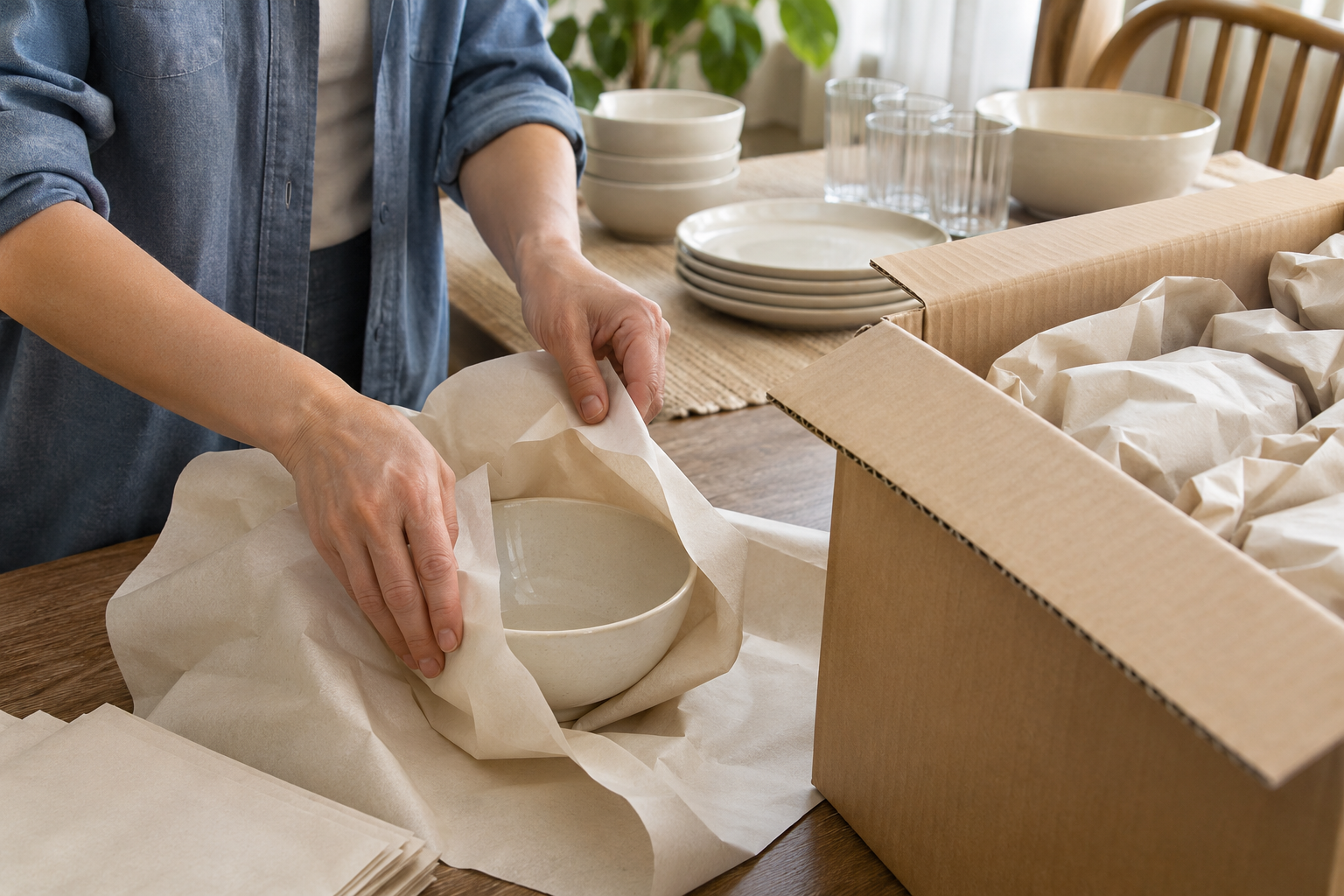
Agree on the packing responsibilities
Confirm whether the mover will pack everything, selected items, or only furniture. Request a written description of the service, including materials, dismantling, and any specialist work. If you intend to pack cartons yourself, tell the company before you begin.
Ask whether customer-packed cartons need inspection or particular materials. Establish how they should be labeled and whether the arrangement changes available shipment protection. Get those answers before sealing boxes, when changing the plan is still straightforward.
Identify belongings that need a separate packing decision. Examples include large mirrors, fragile sculptures, musical instruments, glass furniture, and delicate electronic equipment. Send photographs and dimensions to the mover. Do not assume ordinary cartons or leftover packaging will be accepted for every object.
Set a practical completion date for your own preparation. Leave time to remove unwanted items, clean equipment, and resolve questions. If you are still sorting while the crew is packing, items can easily enter the wrong group or disappear from view before you have recorded them.
Create a clear no-pack area
Choose one secure area for everything traveling with you or staying behind. Keep passports, essential records, keys, chargers, and immediate personal supplies there. Tell every household member and the packing crew that the area is excluded from the shipment.
Make a separate travel inventory. Think about the entire period before delivery, including temporary accommodation and the first days in the new home. Pack clothing and work essentials accordingly, and confirm airline and destination rules for regulated items.
Keep spare lithium batteries and power banks out of shipment decisions until you have checked the relevant transport requirements. For passenger baggage, the FAA says spare lithium batteries must travel in carry-on bags, with applicable limits and airline rules. Passenger baggage guidance does not establish cargo acceptance.↗
Before the crew starts, walk through the no-pack area together. A sign helps, but a direct explanation is more reliable. Recheck the area during the day if family members are moving belongings between rooms or adding items to their travel bags.
Make the inventory usable
Record each significant item and give cartons a consistent identification system agreed with the mover. Describe contents clearly enough to recognize them later. “Kitchen serving dishes” is more useful for your own unpacking plan than an unexplained number with no matching record.
Photograph furniture and other important belongings before packing. Include existing marks and several angles where helpful. For electronics, keep model and serial details with the inventory. Store the records somewhere accessible after your main computer and household files have been packed.
The FMC advises keeping an inventory with supporting photographs, receipts, or appraisals and checking the mover's condition descriptions. Review the actual packing list before signing. Raise discrepancies while the item and the people preparing it are still available.↗
Keep your personal unpacking notes separate from any official inventory fields the mover controls. You can record that a carton contains the coffee equipment without changing shipment identifiers. Consistent references let you connect your own notes to the mover's documentation.
Prepare the kitchen deliberately
Begin by deciding which kitchen items will be useful in the destination home. Check storage space and compatibility before shipping large appliances or duplicate equipment. Separate items needed until departure from those ready for packing.
Empty and clean containers and appliances according to their instructions. Allow items to dry completely before they are packed. Point out detachable parts, glass components, and unusual shapes to the packing team so those features are considered in the preparation.
Group matching pieces where practical. Keep lids with their containers and identify attachments belonging to particular appliances. Photograph an assembled item if the relationship is not obvious. Small organization steps can prevent a carton of unrecognized parts at the other end.
Set pantry goods aside for review instead of placing them automatically among household items. Ask the mover which foods, liquids, or other kitchen contents it will accept for the destination. Do not assume an unopened package is suitable simply because it is commercially sealed.
Prepare bedrooms and clothing
Sort clothing around the climate and lifestyle you expect at destination. Keep enough in your travel bags for the gap before delivery. Review bulky bedding and duplicate linens against the sizes and furnishings of the new home.
Pack only clean, dry textiles using the materials and method agreed with the mover. Ask about preparation for delicate clothing, leather, or other items needing particular care. Avoid treating vacuum compression or plastic wrapping as a universal solution for every fabric.
Empty drawers unless the packing team specifically instructs you otherwise. Check bedside tables, jewelry boxes, pockets, and under-bed storage for personal valuables and documents. These small spaces often contain items that should remain with you.
If furniture will be dismantled, agree who performs the work and how hardware is recorded. Ask for small components to remain identifiable with the relevant piece. Keep assembly instructions accessible digitally when available, especially for furniture with a complicated sequence.
Prepare living-room furniture
Remove loose contents from cabinets, sideboards, and entertainment units. Separate shelves, keys, and detachable components for the crew to assess. Tell the packers about weak joints, existing repairs, or parts that need special handling.

Photograph cable connections before disconnecting electronics if that will help you reconnect them later. Label cables by the device they belong to without covering important product information. Keep one working charger and the equipment you need during travel outside the shipment.
Discuss furniture surfaces before applying any material yourself. Tape, adhesive labels, or an unsuitable covering can create problems for delicate finishes. Let the packing provider specify the protection for the item rather than improvising with whatever supplies are nearby.
Measure large pieces and identify access difficulties before collection day. If a table was assembled inside the room or a sofa entered through an unusual route, tell the crew. That information helps them plan removal without discovering the difficulty after other items are already packed.
Give books, files, and artwork separate attention
Review books and files before packing them. Digitize records where appropriate for your needs, and dispose of sensitive material securely. Keep originals that you may need during relocation under your direct control rather than burying them in a household carton.
If you are packing books yourself, follow the mover's carton and weight instructions. Keep the load manageable and avoid relying on a damaged box. A carton that looks convenient while empty may be unsuitable once filled with dense contents.
Ask for an individual assessment of framed artwork, valuable collections, and fragile display pieces. Explain the materials, dimensions, and any existing condition issues. Let the provider identify the appropriate preparation and any documentation required for the shipment or protection arrangement.
Keep sets and collections identifiable. Record which pieces belong together and photograph them before they are separated. If parts are packed in different cartons, note the cross-reference in your own inventory so you can check the complete set during unpacking.
Inspect the garage and outdoor equipment
Treat the garage as a review area before treating it as a packing area. Separate chemicals, fuels, paints, pesticides, batteries, and powered equipment for discussion with the mover. Do not conceal uncertain items inside otherwise ordinary cartons.
Ask for written instructions for any equipment the provider agrees to carry. Follow the manufacturer's preparation guidance and the mover's transport requirements. If a task needs a qualified service provider, arrange it before collection rather than attempting an unfamiliar procedure under time pressure.
Clean outdoor belongings carefully. The FMC advises that bicycles, flowerpots, and other outdoor items should be free of dirt and insects. Check tires, undersides, joints, and hollow spaces where debris can remain, then allow cleaned items to dry.↗
Review hobby equipment and tools individually. Identify sharp edges, detachable parts, delicate adjustments, and accessories. Make sure the inventory reflects the actual equipment rather than grouping everything under “garage contents,” which gives little help when checking delivery.
Label for identification and practical unpacking
Use the mover's shipment identification method consistently. Ask where labels should go and who assigns carton numbers. Avoid creating a competing numbering system that looks official but does not match the packing list.
For your own planning, record the destination room and a brief contents description. If room names change between homes, use a simple convention everyone understands. A carton intended for the new home office should not become difficult to locate because it came from an old guest bedroom.
Keep sensitive information off external labels. You can maintain detailed records privately without advertising personal data or valuable contents on every carton. Ask the provider how it identifies specially declared items while maintaining the required documentation.
Identify priority cartons in your personal list. These might contain ordinary kitchen supplies, towels, or bedding needed soon after delivery. Remember that priority labeling helps you unpack; it does not guarantee access to a particular carton during transportation or storage.
Supervise packing day without disrupting the work
Begin with a walk-through. Identify excluded areas, fragile items, existing damage, and anything awaiting a decision. Confirm who can answer questions during the day and how the crew should handle an item that differs from the agreed inventory.
Keep routes through the property clear and arrange a safe place for children and pets. Make essential supplies available without placing them among shipment goods. If several household members are present, choose one person to coordinate instructions so the crew receives consistent answers.
Ask questions when you notice something unclear, especially before an item is sealed or removed. Avoid changing the inventory casually during loading. If you add or remove belongings, ensure the change is recorded and ask about any effect on the agreed service.
At the end, inspect every room, closet, and storage space. Check that travel belongings remain with you and that excluded items have not joined the shipment. Review the collection records and keep copies accessible during the rest of your journey.
Keep the home functional until departure
Packing too much too early can make the final days harder. Choose a small set of household supplies that stays available until collection: basic cleaning equipment, bathroom essentials, a change of clothes, and simple meal supplies. Decide in advance whether those items will travel with you, be given away, or be disposed of appropriately.
Use a final-day list for objects still in use. Include the lamp beside your bed, the router, and anything charging overnight. Check the list before the crew finishes rather than trusting memory while rooms are being emptied.
If cleaners or property inspectors will arrive after loading, arrange access and the supplies they need. Keep keys and building passes somewhere secure and separate from the shipment. Confirm who returns them and when. These practical details belong in the departure plan even though they are not packing tasks. Resolving them beforehand lets you concentrate on the inventory and collection records and any unresolved questions about your belongings when the moving team is ready to leave.
Make delivery easier before you leave
Save a copy of the final inventory and your photographs in a secure place you can access abroad. Keep the move reference and coordinator's details nearby. These records will help you identify cartons and raise specific questions after arrival.
Prepare a rough room plan for the new property when possible. Give the delivery team clear instructions about where large pieces belong. Having those decisions ready reduces unnecessary repositioning while cartons and furniture are arriving.
Contact Overseas Moving Company with your inventory, packing preferences, and any items needing special assessment. Agree on the preparation and responsibilities before you seal cartons. A clear packing plan gives every member of the household a defined job and makes collection easier to manage.